Friday, June 2, 2017

May 2017

The most exciting sighting this month was watching 2 Australian Hobbies hunting bats over a dam on Wanna Wanna Rd.  In the course of 30 minutes the two falcons killed 6 bats.  A couple of days later a single Hobby was observed making 8 attacks but failing each time!

Later in the month a dead Southern Boobook was also found in that area (but unlikely to have been Hobby-prey).  Speckled Warblers are seen moderately often, but I was surprised to see 3 at once feeding as part of a flock.  Another bird that is quite uncommon in our area (but quite common in Lake Burley Griffin) is the Australasian Darter.  2 immature birds were seen on Foxlow Lagoon (from the road).

In total we recorded 84 species over the month.  This the expected seasonal drop from April, but is slightly above the average recorded for May.
Migrants have largely migrated although a sighting of an immature Olive-backed Oriole was a large surprise. Breeding has stopped, as expected for the time of year in this area.


As always, thanks to the observers who have provided reports to me for the month.  These have covered sites in Whiskers Creek Rd, Widgiewa Rd, Knox Close, Captains Flat Rd,   Wanna Wanna Rd, and Hoskinstown Village and  Plain. Please pass on interesting sightings to me by email to martinflab@gmail.com.  

1  Waterbirds (pt 1):  (pt 2)(Pt 3); (Pt 4): Black Swan; Australian Wood Duck; Australian Shoveler; Grey Teal; Pacific Black Duck; Hardhead; Australasian Grebe; Darter; Little Pied Cormorant;White‑faced Heron; Australian White Ibis; Straw-necked Ibis; Eurasian  Coot; Black‑fronted Dotterel; Masked Lapwing

2 Birds of Prey:  Brown Goshawk; Collared Sparrowhawk;Wedge-tailed Eagle;  Nankeen Kestrel; Brown Falcon; Australian Hobby; 

3 Parrots and Relatives: Yellow-tailed Black-Cockatoo; Gang‑gang Cockatoo; Galah; Sulphur‑crested Cockatoo; Australian King‑parrot; Crimson Rosella; Eastern Rosella; Red-rumped Parrot

4 Kingfishers and other non-songbirds (Pt 1) (Pt 2) (Pt 3): Stubble Quail; Rock Dove, Common Bronzewing; Crested Pigeon;Tawny Frogmouth; Southern Boobook;  Laughing Kookaburra; Superb lyrebird

5 Honeyeaters: Eastern Spinebill; Yellow-faced Honeyeater; White-eared Honeyeater; Noisy Miner; Red Wattlebird;  Brown‑headed Honeyeater; 

6 Flycatchers and similar speciesGolden Whistler;Grey Shrike-thrush; Grey Fantail; Willie Wagtail; Magpie-lark; Scarlet Robin;, Flame Robin; Eastern Yellow Robin; Welcome Swallow; 

7 Thornbills, Finches and similar species (Pt 1) (Pt 2):  Superb Fairy-wren; White-browed Scrubwren; Speckled warbler; Weebill; Striated Thornbill; Yellow‑rumped Thornbill; Buff‑rumped Thornbill; Brown Thornbill; Spotted Pardalote; Striated Pardalote; Silvereye; Double‑barred Finch; Red‑browed Finch; Diamond Firetail; House Sparrow; European Goldfinch

8 Other, smaller birds:  White-throated Treecreeper; Black-faced Cuckoo-shrike; Olive‑backed Oriole; ; Dusky Woodswallow; Common Blackbird; Common Starling; Mistletoebird; Australasian  Pipit;

9  Other, larger birds: Satin Bowerbird; Grey Butcherbird; Australian Magpie; Pied Currawong; Grey Currawong; Australian Raven; Little Raven; White-winged Chough

Sunday, April 30, 2017

April 2017

It seems to me that the diversity of bird species observed in the area has picked up a tad towards the end of the month.  Overall we have recorded 95 species - effectively the same as the 94 species recorded in March.  This is well above the average (for 2010 -2016) of 87 species (but below the remarkable 102 species seen in April 2016.
Although Wedge-tailed Eagles are relatively common in the area it was rather ‘special’  to see a group of three young, “talkative” birds glide over the second Garden Aid day at Douglas Close.  For less common species the "standouts" were:
  • A Powerful Owl continues to be heard on Wanna Wanna Rd except when I turn up.  
  • Flame Robins – usually restricted to the Plain – are turning up in the higher country of the fire ground.  I have seen them on our property, elsewhere on Whiskers Creek Rd; and on Widgiewa Rd.
  • A Barn Owl has been seen several times on Plains Rd
  • The Spotted Harrier continues to be seen on Plains Rd.

The number of Waterbird species has declined dramatically since the return of waterbirds from the Western floods.  I is quite impressive to have records for 3 Owl species this month!

Many migrant species departed, on schedule in March, but the most impressive movement, of Yellow-faced Honeyeaters, was very evident in April.  Driving through the flocks moving on Briars-Sharrow Rd was like going through a locust swarm.  The fire ground didn’t seem to have had much effect on the movement. Less common sightings of migrants have been:
  • a very late Olive-backed Oriole seen on Wanna Wanna Rd late in the month; and
  • 5 Fuscous Honeyeaters (uncommon in this area at any time) seen on Widgiewa Rd on 29 April. flying towards the Plain 


I have created an ad-hoc post about the departure of migrants, and will update that to include April doings in the next couple of days.In the list below Summer mgirants are marked in orange and those which arrive in Winter in blue.

As always, thanks to the observers who have provided reports to me for the month.  These have covered sites in Whiskers Creek Rd, Widgiewa Rd, Knox Close, Radcliffe Circuit, Captains Flat Rd, Molonglo Valley,  Woolcara Lane  Wanna Wanna Rd, and Hoskinstown Village and  Plain. Please pass on interesting sightings to me by email to martinflab@gmail.com

1  Waterbirds (pt 1):  (pt 2)(Pt 3); (Pt 4):  Musk Duck; Black Swan;  Australian Shelduck; Australian Wood Duck; Australian Shoveler; Grey Teal; Chestnut Teal; Pacific Black Duck; Hardhead;  Australasian Grebe; Hoary-headed Grebe; Little Black Cormorant; Little Pied Cormorant; White‑necked Heron;  White‑faced Heron; Eurasian  Coot;  Masked Lapwing;

2 Birds of Prey:   Brown Goshawk; Collared Sparrowhawk;Spotted Harrier;  Wedge-tailed Eagle; Little Eagle; Nankeen Kestrel; Brown Falcon;

3 Parrots and Relatives:  Yellow-tailed Black-Cockatoo; Gang‑gang Cockatoo; Galah;  Little   Corella; Sulphur‑crested Cockatoo; Australian King‑parrot; Crimson Rosella; Eastern Rosella; Red-rumped Parrot

4 Kingfishers and other non-songbirds (Pt 1) (Pt 2) (Pt 3): Stubble Quail; Common Bronzewing; Crested Pigeon; Tawny Frogmouth; Southern Boobook; Eastern Barn Owl; Powerful Owl;  Laughing Kookaburra;

5 Honeyeaters: Eastern Spinebill; Yellow-faced Honeyeater; White-eared Honeyeater; Fuscous Honeyeater; White‑plumed Honeyeater; Noisy Miner; Red Wattlebird; Brown‑headed Honeyeater; White-naped Honeyeater; Noisy Friarbird. 

6 Flycatchers and similar speciesGolden Whistler;Rufous Whistler; Grey Shrike-thrush;  Grey Fantail; Willie Wagtail;  Magpie-lark; Scarlet Robin; Flame Robin; Eastern Yellow Robin; Welcome Swallow;

7 Thornbills, Finches and similar species (Pt 1) (Pt 2):  Superb Fairy-wren; White-browed Scrubwren; Speckled warbler; Weebill; Striated Thornbill;  Yellow‑rumped Thornbill; Buff‑rumped Thornbill; Brown Thornbill; Southern Whiteface; Spotted Pardalote; Striated Pardalote; Silvereye;  Double‑barred Finch; Red‑browed Finch; Diamond Firetail; House Sparrow; European Goldfinch

8 Other, smaller birds:  White-throated Treecreeper;  Black-faced Cuckoo-shrike; Olive‑backed Oriole; Dusky Woodswallow; Skylark; Common Blackbird; Common Myna; Common Starling; Mistletoebird; Australasian  Pipit;

9  Other, larger birds: Satin Bowerbird; Grey Butcherbird; Australian Magpie; Pied Currawong; Grey Currawong; Australian Raven; Little Raven; White-winged Chough

Tuesday, April 4, 2017

Migrant departures 2017

I have posted a couple of times in recent years about the months of first reporting migrants.  The obvious sequel to this is to do the same for departures.

However it isn't quite so easy: once a species has been spotted it is definitely here and future sightings (or lack thereof) don't matter.  However with departures it is only really possible to say the bird has gone some time after the last sighting.   For example a species is seen January, but not in February: have they left the area or were they just missed?  If they are subsequently observed in (eg) March it is the latter.

However I thought it worth a try.  I have used the COG classification of migrant species (some of which show a somewhat different pattern of movement here) and classified them according to month in which they are usually last seen here.  I have deleted some species (eg Masked and White-browed Woodswallows) as they are too unusual here to be commented on.
 As at the date of writing (4 April) 9 species have departed early while only 1 has been recorded after the expected date of departure.  My hypothesis is that this reflects the very dry Summer leading to a dearth of insects leading to many species going elsewhere to seek food.

Saturday, April 1, 2017

March 2017

The number of species reported in March (94) has declined as expected due to seasonal change.  We have recorded a few more species than in January 2016 but are exactly on the average.

The reports include a number of less common species, headed up by a Powerful Owl, heard calling on Wanna Wanna Rd on a couple of mornings. Other less common sightings (for some reason the first three are from Wanna Wanna Rd) have been:

  • a flock of 11 Rainbow Bee-eaters  - almost certainly on migration; 
  • Dollarbirds (a late record); 
  • Satin Flycatcher - again almost certainly migrating from the high country; and
  • from the Plain,  5 Australian Hobby - often rated as a migrant species although our records have then through the year.
It is rather more difficult to assess the situation of migrants (shown in orange below) departing than those arriving as they may also be recorded in later months (and thus not have departed).  However it seems that a number of migrant species have not been reported for the last two months and may thus be thought to have migrated.  In a number of cases, particularly cuckoos, this has been earlier than expected.  I suspect this may be due to the lack of rain in January and February reducing availability of insects for food. 

On the subject of feeding habits I found this report from Wanna Wanna "both interesting and amusing:
"... the roadworks people put netting down along some of the verges and then sprayed it with seed.   The parrots had several picnics.   But I did see seven Bronze Wings.

There have been a few sightings of dependent young birds which count as breeding records (these species marked in red below).

As always, thanks to the observers who have provided reports to me for the month.  These have covered sites in Whiskers Creek Rd, Widgiewa Rd, Knox Close, Radcliffe Circuit, Captains Flat Rd, Molonglo Valley, Wanna Wanna, and Hoskinstown Village and  Plain. I'm always happy to receive reports, my email address is martinflab@gmail.com.


1  Waterbirds (pt 1):  (pt 2)(Pt 3); (Pt 4): Black Swan;  Australian Shelduck; Australian Wood Duck; Pink-eared Duck; Australian Shoveler; Grey Teal; Pacific Black Duck; Hardhead;  Australasian Grebe; Hoary-headed Grebe; Little Black Cormorant; Little Pied Cormorant; White‑necked Heron;  White‑faced Heron; Nankeen Night Heron; Australian White Ibis; Straw-necked Ibis; Eurasian  Coot;

2 Birds of Prey:  Black-shouldered Kite; Brown Goshawk; Wedge-tailed Eagle; Nankeen Kestrel; Brown Falcon; Australian Hobby;

3 Parrots and Relatives: Yellow-tailed Black-Cockatoo; Gang‑gang Cockatoo; Galah;  Sulphur‑crested Cockatoo; Australian King‑parrot; Crimson Rosella; Eastern Rosella; Red-rumped Parrot

4 Kingfishers and other non-songbirds (Pt 1) (Pt 2) (Pt 3): Common Bronzewing; Crested Pigeon;  Tawny Frogmouth;  Southern Boobook; Powerful Owl; Laughing Kookaburra; Sacred Kingfisher; Rainbow Bee‑eater; Dollarbird

5 Honeyeaters: Eastern Spinebill; Yellow-faced Honeyeater; White-eared Honeyeater; Noisy Miner; Red Wattlebird; Brown‑headed Honeyeater; White-naped Honeyeater; Noisy Friarbird

6 Flycatchers and similar speciesRufous Whistler; Grey Shrike-thrush; Grey Fantail; Willie Wagtail; Leaden Flycatcher; Satin Flycatcher; Magpie-lark; Scarlet Robin; Eastern Yellow Robin; Welcome SwallowTree Martin

7 Thornbills, Finches and similar species (Pt 1) (Pt 2):  Superb Fairy-wren; White-browed Scrubwren; Weebill; White-throated Gerygone; Striated Thornbill; Yellow‑rumped Thornbill; Buff‑rumped Thornbill; Brown Thornbill; Spotted Pardalote; Striated Pardalote; Silvereye; Red‑browed Finch; Diamond Firetail; House Sparrow; European Goldfinch

8 Other, smaller birds:  White-throated Treecreeper; Varied Sitella; Black-faced Cuckoo-shrike;Dusky Woodswallow; Australian Reed-warbler; Common Blackbird; Common Myna; Common Starling; Mistletoebird; Australasian  Pipit;

9  Other, larger birds: Satin Bowerbird; Grey Butcherbird; Australian Magpie; Pied Currawong; Grey Currawong; Australian Raven; Little Raven; White-winged Chough

Wednesday, March 1, 2017

February 2017

I'll start with a shot of a Kookaburra from Margie McComb.
In view of the Kooka's dietary habits Margie decided to keep the winter shade cloth over the stag-horn at their back door while the grey shrike thrush raised their young.

While thinking of Kingfishers, here is the Summer migrant, Sacred Kingfisher.  This one was in a group of 3 seen by Joy Williams and from its rather muted colours I reckon it is a youngster, not long out of the nest.
This year a pair of Sacred Kingfishers were kind enough to breed in a property on Knox Close.

The month closed off with the excitement of a Powerful Owl heard early one morning along Wanna Wanna Rd on 28 February.  During the month, the other notable unusual birds were: 

  • an Intermediate Egret seen on the rapidly shrinking marsh on the Plain - notes on identifying Egrets are here
  • at least 2 juvenile Nankeen Night Herons - originally seen at the Molonglo Crossing on Briars Sharrow Rd, then 1 near a farm dam on Plains Rd and finally 1 perching in a somewhat blackened eucalypt in our yard on 28 February; 
  • the first Pink-eared Duck for several months seen pn the marsh on the Plain; and
  • a Black Falcon seen on the Plain.

The final species in that list calls to mind the increased raptor diversity in the area, with Swamp and Spotted Harriers, and Little Eagle reported.

Overall we recorded 103 species - a little above both average and the number for the last 2 years.
I have been very surprised by the number of species which have been seen in the burnt area.  An initial report was compiled on  25 February and I'll update it in the near future.

There have been a few reports of breeding (species highlighted in red below).  Most of the Summer migrants are still around - and in fact Dusky Woodswallows have finally appeared in numbers at Whiskers Creek Rd.  I will do a special report on their movements soon.

As always, thanks to the observers who have provided reports to me for the month.  These have covered sites in Whiskers Creek Rd, Widgiewa Rd, Knox Close, Radcliffe Circuit, Captains Flat Rd, Molonglo River Park, Molonglo Valley, Wanna Wanna, and Hoskinstown Village and  Plain. I'm always happy to receive reports, my email address is martinflab@gmail.com.

1  Waterbirds (pt 1):  (pt 2)(Pt 3); (Pt 4): Musk Duck; Black Swan;  Australian Shelduck; Australian Wood Duck; Pink-eared Duck; Australian Shoveler; Grey Teal;  Pacific Black Duck; Hardhead; Australasian Grebe; Hoary-headed Grebe; Little Pied Cormorant; White‑necked Heron;  Intermediate Egret; Eastern Great Egret: White‑faced Heron; Nankeen Night Heron; Australian White Ibis; Straw-necked Ibis; Eurasian  Coot; Black-winged Stilt; Black‑fronted Dotterel; Masked Lapwing; Whiskered tern

2 Birds of Prey:  Brown Goshawk; Collared Sparrowhawk;Spotted Harrier; Swamp Harrier; Wedge-tailed Eagle; Little Eagle; Nankeen Kestrel; Brown Falcon; Black Falcon, Peregrine Falcon.

3 Parrots and Relatives:  Yellow-tailed Black-Cockatoo; Gang‑gang Cockatoo; Galah;  Sulphur‑crested Cockatoo; Australian King‑parrot; Crimson Rosella; Eastern Rosella; Red-rumped Parrot

4 Kingfishers and other non-songbirds (Pt 1) (Pt 2) (Pt 3): Stubble Quail; Common Bronzewing; Crested Pigeon; Tawny Frogmouth; Southern Boobook; Powerful Owl; Painted Button-quail; Laughing Kookaburra; Sacred Kingfisher; Dollarbird

5 Honeyeaters: Eastern Spinebill; Yellow-faced Honeyeater; White-eared Honeyeater; Noisy Miner; Red Wattlebird; Brown‑headed Honeyeater; Noisy Friarbird.

6 Flycatchers and similar speciesRufous Whistler; Grey Shrike-thrush; Grey Fantail; Willie Wagtail; Leaden Flycatcher; Magpie-lark; Scarlet Robin; Eastern Yellow Robin; Welcome Swallow

7 Thornbills, Finches and similar species (Pt 1) (Pt 2):  Superb Fairy-wren; White-browed Scrubwren; Weebill; White-throated Gerygone; Striated Thornbill; Yellow‑rumped Thornbill; Brown Thornbill; Southern Whiteface; Spotted Pardalote; Striated Pardalote; Silvereye; Double‑barred Finch; Red‑browed Finch; Diamond Firetail; House Sparrow; European Goldfinch

8 Other, smaller birds:  White-throated Treecreeper; Black-faced Cuckoo-shrike; Olive‑backed Oriole; Dusky Woodswallow; Skylark; Australian Reed-warbler; Common Blackbird; Common Myna; Common Starling; Mistletoebird; Australasian  Pipit;


9  Other, larger birds: Satin Bowerbird; Grey Butcherbird; Australian Magpie; Pied Currawong; Grey Currawong; Australian Raven; Little Raven; White-winged Chough

Saturday, February 25, 2017

Birds after the inferno

We were not much in Carwoola for the first few days after the fires tore across our block.  We actually moved back home on 24 February.  So here are my recent observations

From the first 24 hours we were back.

Around the house we have had a surprising number of the smaller birds.  The most obvious, and in greatest numbers have been Superb Fairy-wrens.  They and the thornbills and scrubwrens seem to be finding plenty to glean on the ground and we are providing water for them.  Quite a few bushes still have leaves so they have had shade on the hot days.

Medium-sized birds, especially nectivores have been thin on the ground.  The only honeyeaters seen or heard have been Red Wattlebirds and, up the top of the block, Noisy Miners.  No Yellow-faced Honeyeaters, Noisy Friarbirds nor Eastern Spinebills.  Two Rufous Whistlers were calling this morning and a couple of Black-faced Cuckoo-shrikes were seen on Widgiewa Rd.  Grey Fantails are evident as always.

I assume these latter species are dining on the dead insects around the area.  There are plenty of former grasshoppers (and still a surprising number of live ones: how did they survive?)  Also I have just removed the leaves from our gutters and it seemed that dead Christmas Beetles made a significant contribution to the biomass.

Parrots and their relatives have not been around much.  I have heard a few Galahs and some Yellow-tailed Black-Cockatoos have been the only participants from this family group.

The dominant species generally appears to be Little Ravens.  As we finished the dog walk this morning a flock of 50 of these raucous birds were carrying on alarmingly by the Creek.  Other large birds seen have been several family (? - I didn't check their DNA)  groups of Australian Ravens; good numbers of Australian Magpies; a pair of Magpie Larks; a Collared Sparrowhawk and a Kestrel were the contributions form the raptor family.  Finally while on the roof a clan of about 6 White-winged Choughs went by.

Not a bad haul in the circumstances.

Later sightings

The next morning 5 Australian White Ibis flew over: great scavengers (a common name in Sydney is Bin-chook) they'd undoubtedly got the word that grasshoppers were easier to spot!  Masked Lapwings were down at a dam.  Noisy Friarbirds made their presence known and a flock of 12 Dusky Woodswallows were hawking off the power lines.  The latter species have been thin of the ground this season.

Subsequently Grey Shrike-thrushes have been everywhere.  A Sacred Kingfisher flew across our block and a pair (OK, two) of Grey Currawongs were grazing on our lawn.  The choughs are patrolling every day (and causing hypertension when they kick up a cloud of smoky dust).

The biggest surprise was a juvenile Nankeen Night Heron perching briefly in a tree outside our sun room,  As I commented in a message to the COG chatline "I had to check the bottle of Shiraz to make sure I had only had one glass!"

Other eyes

A number of other folk in the area report birds they have seen to me, which helps keep tabs on what is happening.  

Since the fire one neighbour reported, through Facebook, a quail on their lawn.  This resolved to a Painted Buttonquail.  The observer commented that they knew there were quail in the paddock but hadn't seen them at the house before.

Another observer commented :
I have seen copious magpies, ravens, crimson rosellas, superb blue wrens and red browed finches….but none of our white browed scrubwrens (we had HEAPS) and it is noticeably quieter :-(   I can’t hear any of our usual wattle birds, honeyeaters or noisy friars…it’s really quite depressing :-(
I have seen quite a few raptors since the fires though - brown goshawk, wedgies and what I think was actually an Australian Hobby….I can’t think what else it could have been. I haven’t seen one here before!  
Lastly, put me down for a white faced heron from the other day and a black faced cuckooshrike as well - just saw it this morning.  Oh and a bunch of maned ducks - there’s a family group at the end of Widgiewa that I’ve had to wait numerous times whilst they waddle across the road.  One was hit the other day by a car in front of me and I got out and moved it to the side of the road - was hard watching the family try and process what had happened when they got to the body :-(

Comparisons

A Canberra friend commented that soon after the 2003 bushfires he visited the Bullen Range (across the 'bidgee from Kambah) and the only bird he saw was a Superb Lyrebird.  Several months later when I returned to Australia and visited the Brindabellas the only birds in numbers were Flame Robins: I think we counted 25 in 1km of Warks Rd.

Tuesday, February 14, 2017

Egret identification

I saw an Egret on the Plain yesterday and on peering closely determined it was an Intermediate Egret rather than the more usual Great Egret.  As, when not in breeding plumage, they are basically white water birds it is a bit tricky to tell them apart I thought I'd share a couple of poor photographs.

If you are lucky enough to get the two species close together the Great is clearly the larger of the two.  However it is against the Rules of Nature for birds to be so cooperative!  I did get some snaps of a Great Egret at Kellys Swamp on Valentine's Day and have used them below.

The two best field marks are:
  • the length of the neck relative to the body.  These are about equal in the Intermediate Egret

  •  but the neck is much longer in the Great Egret.

 .. when it is not twisted!
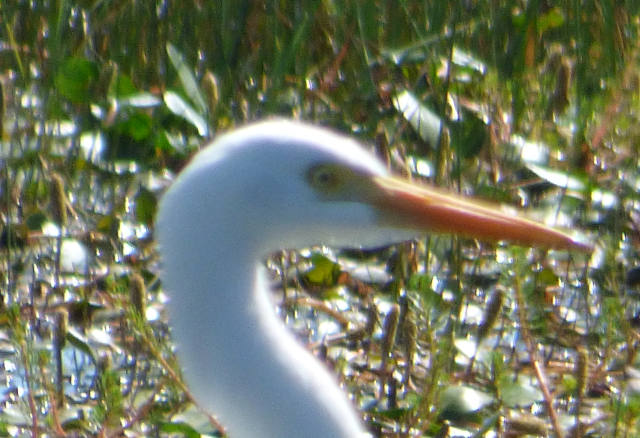
  • If you get a close look the bare yellow skin does not go past the eye in the Intermediate Egret 
 This intermediate was also at Kellys.
In the Great Egret the yellow clearly goes past the eye.
There are two other Egret species possible in this area.
  • The Little Egret is smaller again (about the size of a White-faced Heron) but has a dark bill.  They are quite rare in this area.
  • Cattle Egrets are easy in breeding plumage as their wings are an orangey colour.  In non-breeding plumage they are distinctly dumpy in shape, rather than the fairly graceful profile of the other species.  They are also usually found in pasture (rather than water) associating with bovines!  They are becoming more frequent in this area..